What Should You Put on Your Exhibition Stand?
A Practical Guide to Messaging That Actually Works at Events
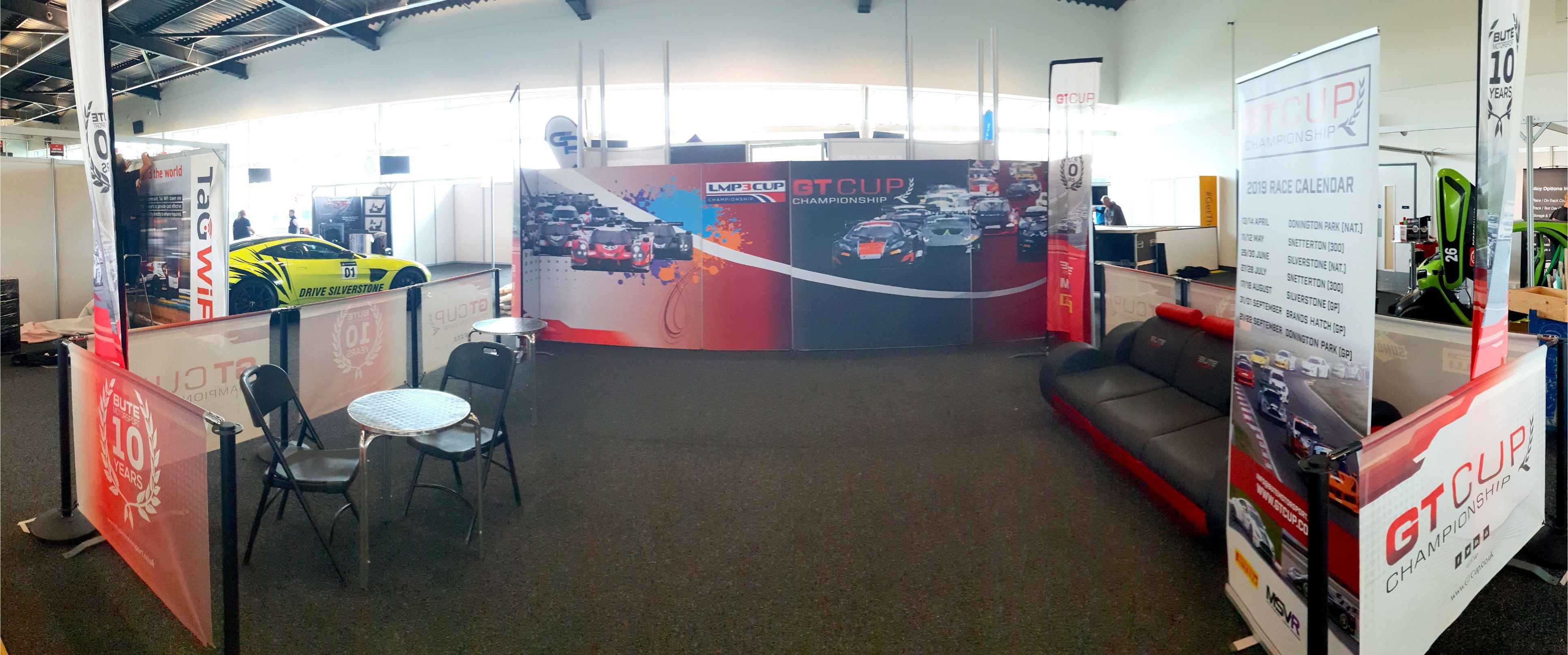
When businesses plan an exhibition stand, the conversation usually starts with structure:
- Which branded products will get the message across?
- How big should it be?
- How much should we spend on our trade stand?
- Do we need walling?
- Should we add banners?
The harder question comes later:
What are we actually going to say?
In a crowded exhibition hall, your messaging does most of the heavy lifting. Visitors scan stands in seconds. They decide almost instantly whether your space feels relevant to them.
Your job is to make the right person stop walking. The explaining comes afterwards, in conversation. If you want the stand to be noticed from across the hall in the first place, our guide to designing a stand that gets attention covers the visual side.
Start With One Commercial Objective
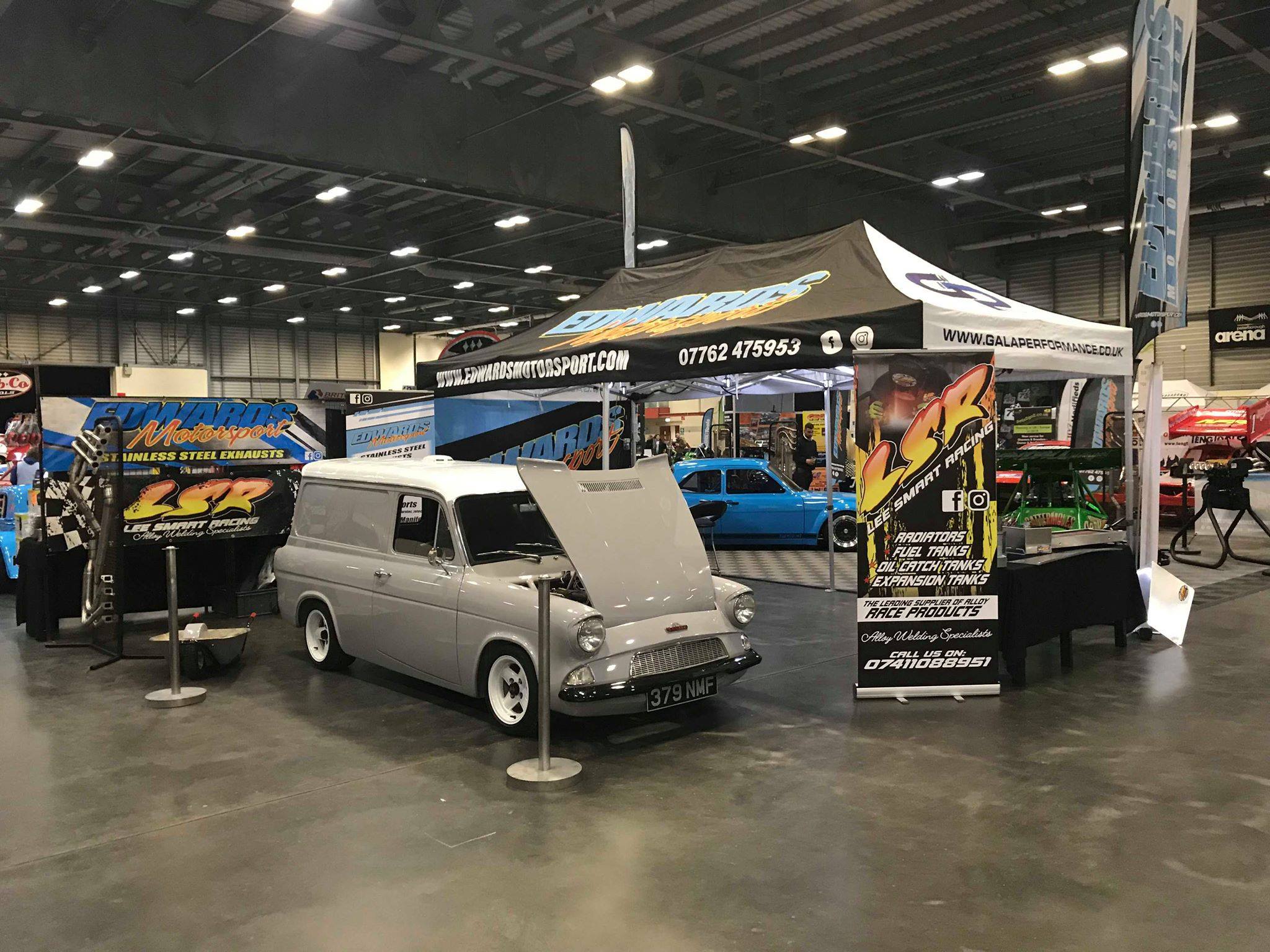
The most effective exhibition stands are built around a single, clear objective.
Not ten services. Not a full company history. Not every product category.
One objective.
That could be:
- Launching a new service
- Driving sign-ups
- Booking demos
- Generating qualified B2B leads
- Promoting a time-sensitive offer
If your graphics try to communicate multiple priorities, none of them land clearly. A focused stand feels confident. A crowded stand feels uncertain.
Decide the objective first. Then build the messaging around it.
What Should Go on Your Main Backdrop?
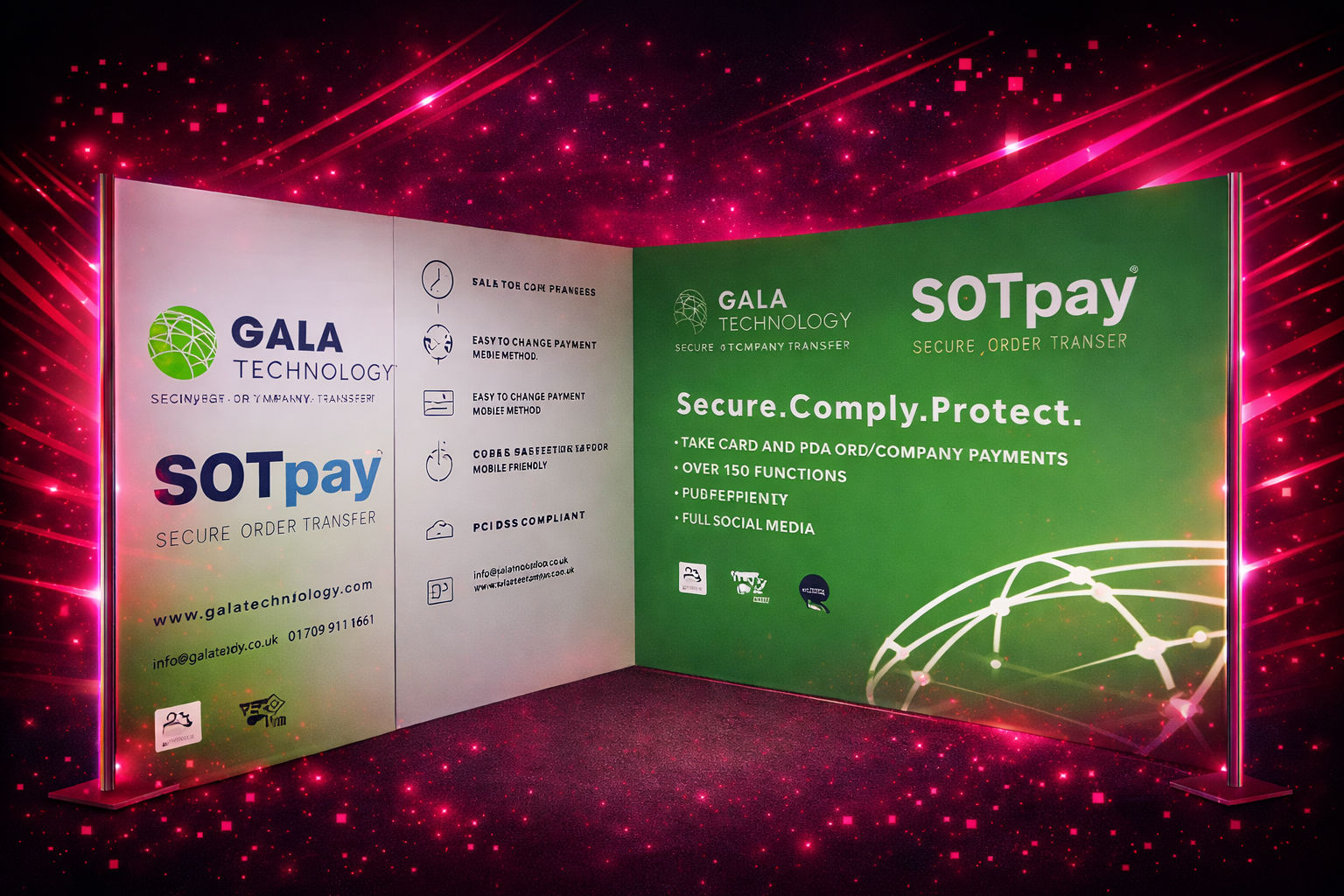
Your main exhibition walling or backdrop should communicate three things within a few seconds of visual contact:
- Who you are
- What you do
- Who you do it for
That is it.
A strong backdrop typically includes:
- Your logo, positioned for visibility from distance
- A short strapline that explains your offer clearly
- A concise value proposition
- A supporting visual that reinforces the message
The mistake many exhibitors make is turning their backdrop into a brochure. Large blocks of text are rarely read. Visitors do not stand in aisles reading paragraphs. They scan, filter and move.
If your backdrop requires effort to understand, it will be ignored.
Think clarity over completeness.
Should You Promote Everything You Offer?
Almost never.
Exhibition halls are noisy environments. The more options you present, the harder it becomes for visitors to identify whether you are relevant to them.
Instead of listing every service, consider:
- Promoting a flagship offer
- Highlighting a key differentiator
- Focusing on a specific audience segment
- Featuring a strong outcome
For example:
- “Payment Solutions for Accountants”
- “Modular Event Structures for Motorsport Teams”
- “Office Branding for Growing SMEs”
Specific messaging attracts specific visitors. Generic messaging attracts no one in particular.
What Should a Roller Banner Include?
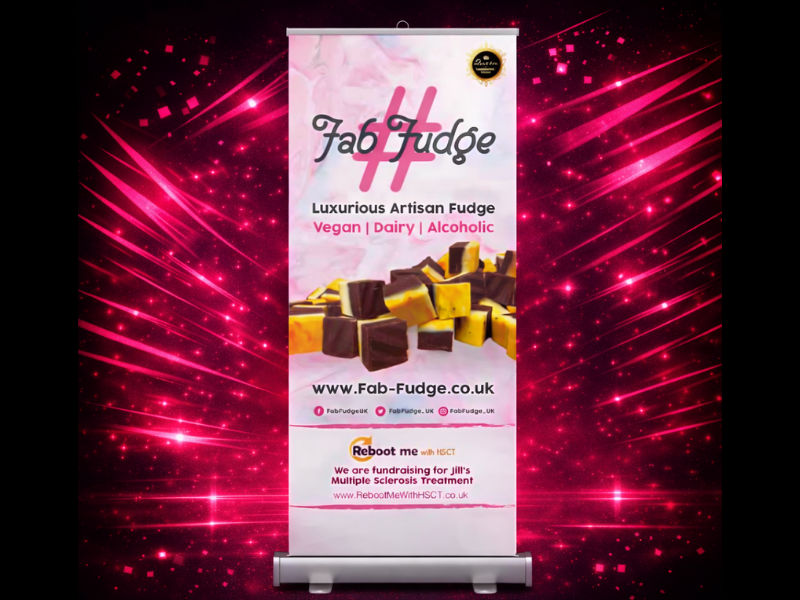
Roller banners are best used to support and expand your core message rather than duplicate it.
A strong roller banner usually contains:
- A clear headline that can be read from distance
- Three to five concise benefit statements
- A relevant supporting image
- A visible website or call to action
Use multiple banners strategically. One can introduce the brand. One can explain the solution. One can highlight proof, such as testimonials or case studies.
They act as conversation prompts rather than information boards.
What Should You Put on a Printed Table Cover?
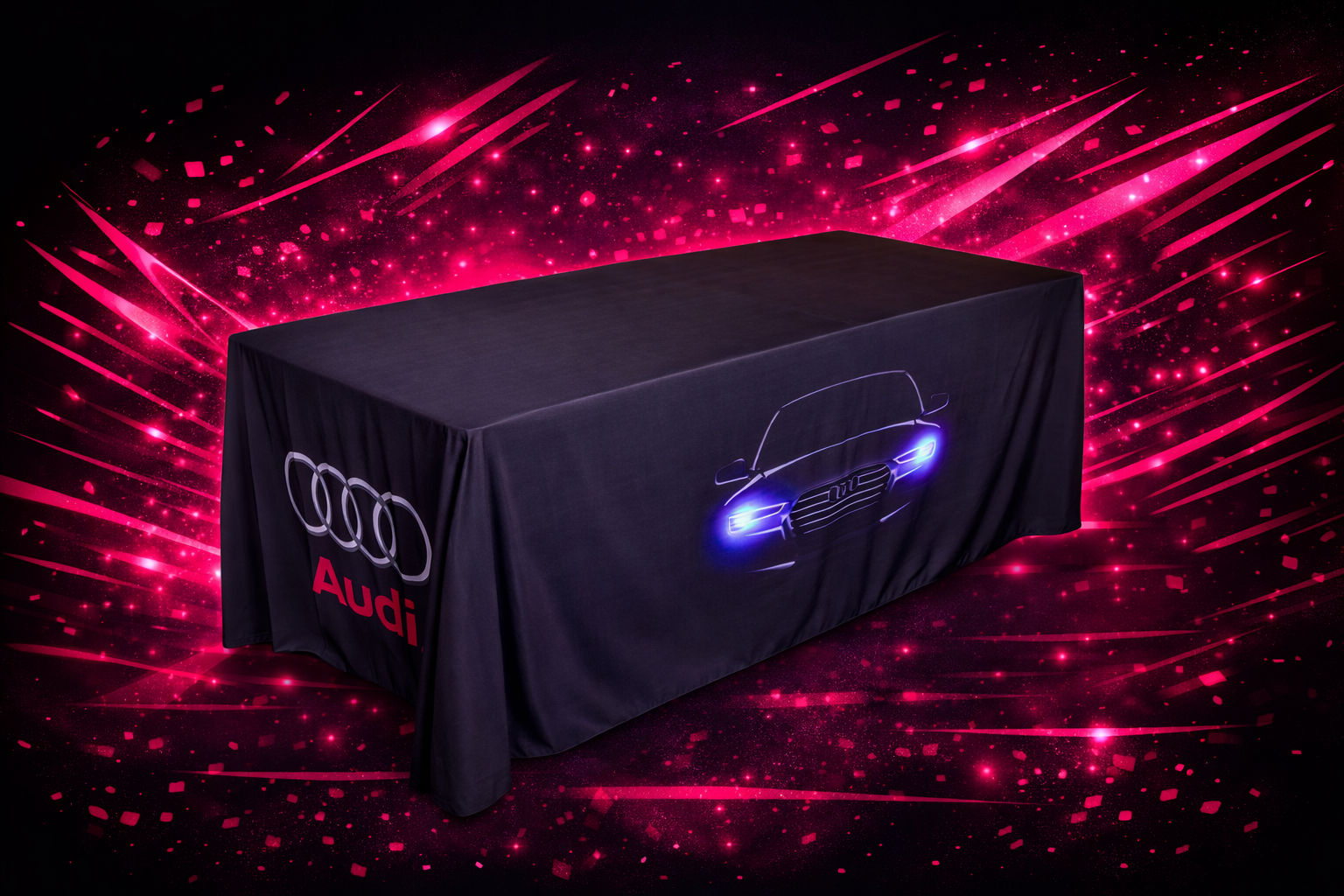
Table covers are there to reinforce your identity.
A clean logo. A clear web address. Strong brand consistency.
Their purpose is cohesion. They prevent visual disruption and ensure every element of your space feels considered.
It is a small thing, and small consistencies build credibility.
Should You Include Pricing on Your Stand?
Pricing can be powerful, but it changes the tone of your stand immediately.
Including pricing works well when:
- Your offer is product-based and straightforward
- You want to pre-qualify budget-conscious visitors
- Your price point is competitive and transparent
If your services are bespoke or consultative, pricing on large-format graphics may limit conversations before they begin.
That makes it a commercial call, taken before the design work starts.
Do QR Codes Actually Work?
QR codes are effective when they are purposeful.
They work best when:
- Offering a downloadable guide
- Driving to a landing page
- Collecting competition entries
- Encouraging digital brochure access
They are ineffective when placed without instruction.
If you use one, add context:
- “Scan to download the full guide”
- “Scan to book a demo”
And ensure it is large enough to scan comfortably.
How Much Information Is Too Much?
A simple test:
Step back three metres from your stand design.
If you cannot understand the core message in under five seconds, it is too complex.
Your stand supports the sale. Your team closes it.
The stand's role is to:
- Signal relevance
- Spark curiosity
- Create a professional environment
- Support conversation
Detail comes after engagement.
The Psychology of a Clear Stand
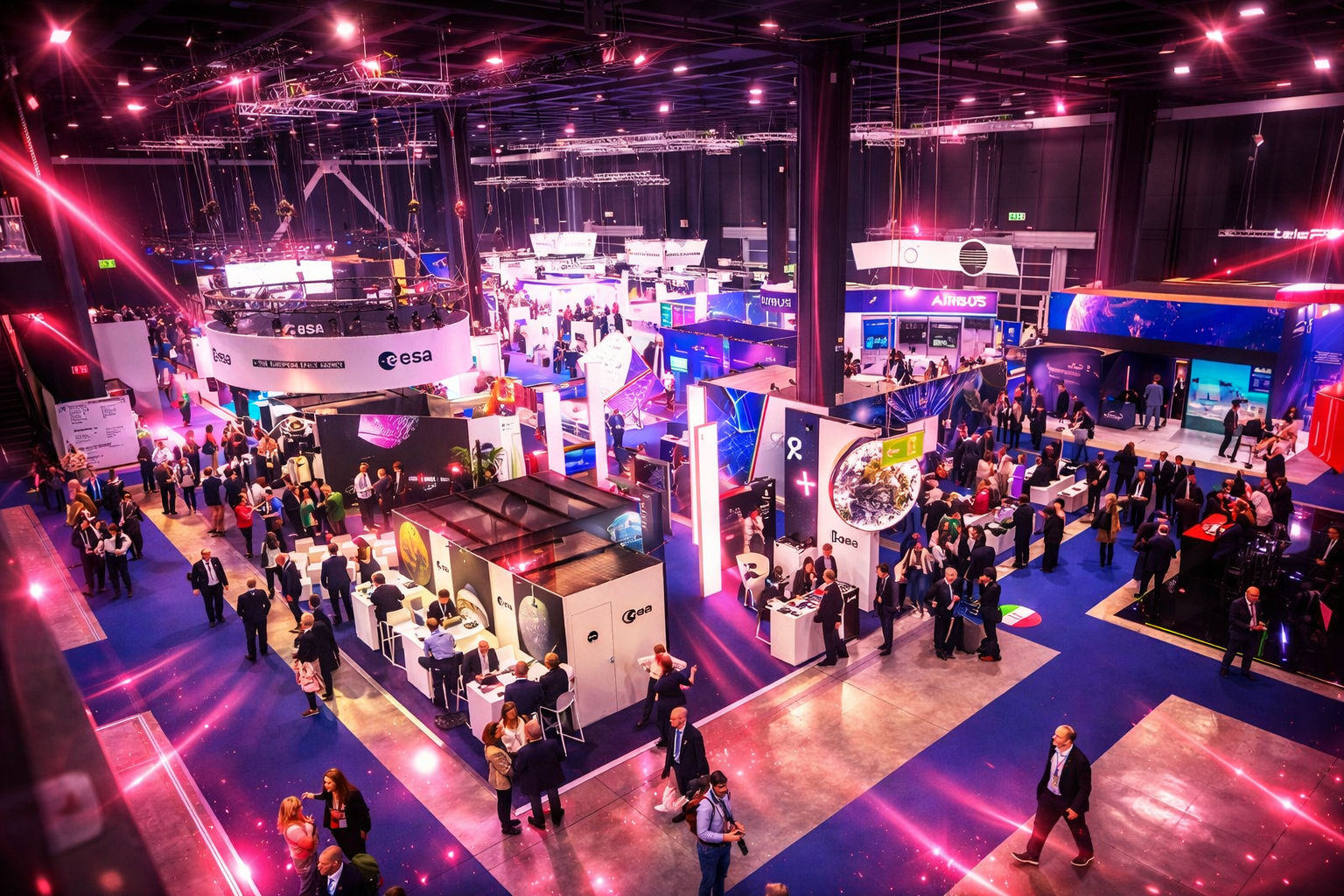
In a competitive hall, visitors subconsciously assess:
- Professionalism
- Clarity
- Confidence
- Relevance
A stand with structured messaging and visual hierarchy communicates authority before a word is spoken. A stand overloaded with information communicates uncertainty. The research behind that sits in the science behind visual communication.
Clear messaging reduces friction. Reduced friction increases engagement. Increased engagement increases opportunity.
Bringing It All Together
An effective exhibition setup often combines:
- A structured backdrop with one clear message
- Supporting roller banners that expand on benefits
- A branded table or greeter stand that anchors engagement
- Consistent visual identity across all elements
Each component should reinforce the same commercial objective. Our guide to which indoor branding products to use covers how to choose them, and the print-ready artwork guide makes sure the finished graphics print sharp.
When every element works together, your space feels deliberate. And deliberate stands attract deliberate conversations.
Clear messaging turns structure into strategy. Whether you are building a modular exhibition stand, updating your roller banners or refreshing your event graphics, every element should work toward one defined objective. Explore our indoor branding range to create a cohesive display setup that communicates your message with clarity and confidence at your next event. If you need any help at all, our team can be contacted on 01709 911948 now.
Frequently Asked Questions
How much text should an exhibition stand include?
Should I repeat my logo on every display item?
Should I use bullet points on banners?
Should my website be visible?
Should I put pricing on my exhibition stand?