Branded motorsport marquee with printed canopy and walls

Designing an Outdoor Frame Banner for Your Brand

Written by Jonathan Rodgers

A frame banner stands on its own and gets approached from both sides, so it is designed differently from a banner fixed flat to a fence. Here is how to design one for your brand: the fixed format, both-sided decisions, and where content belongs.

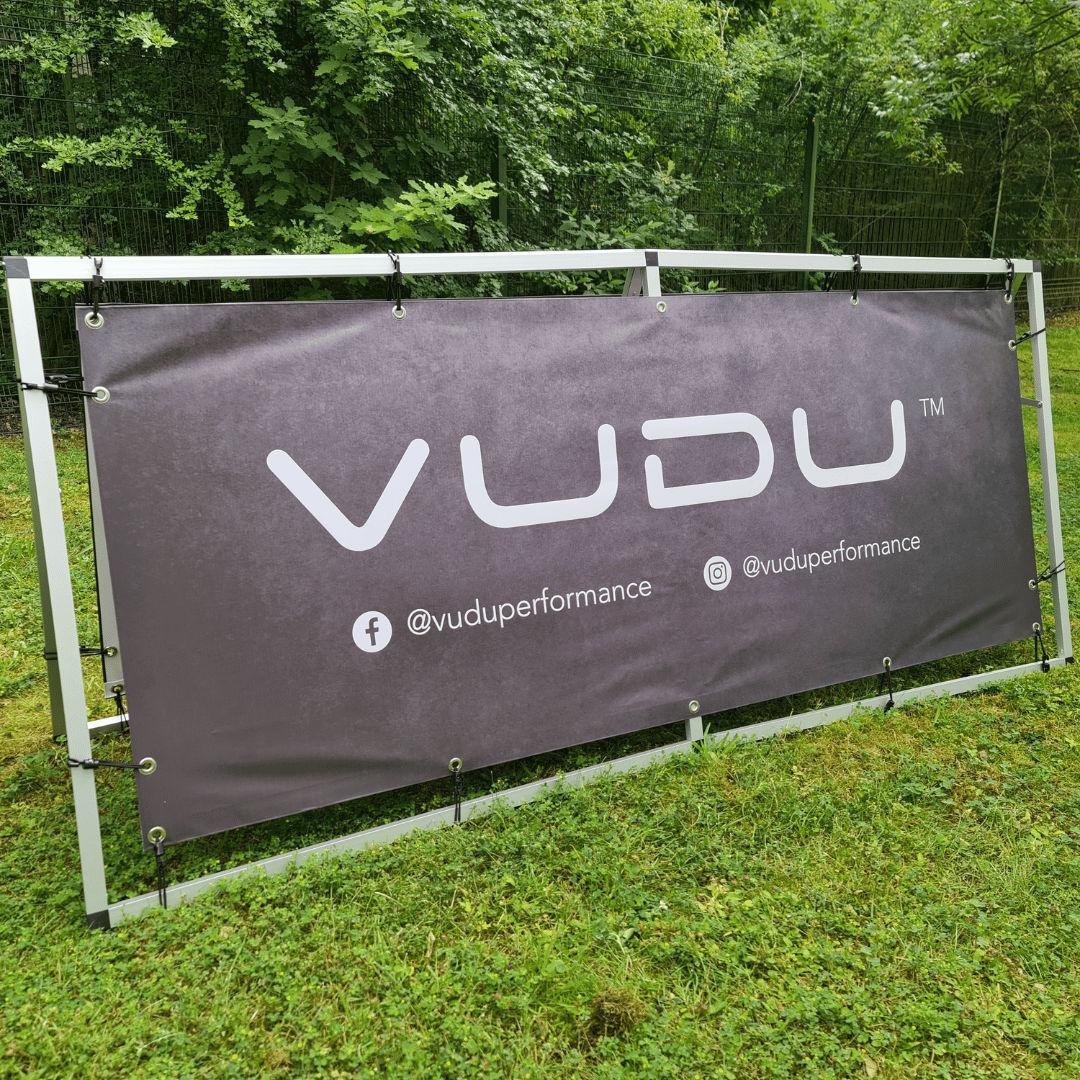
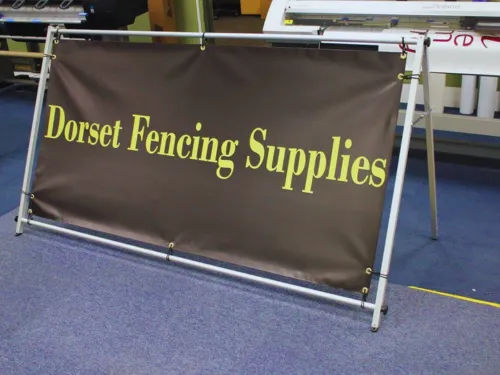
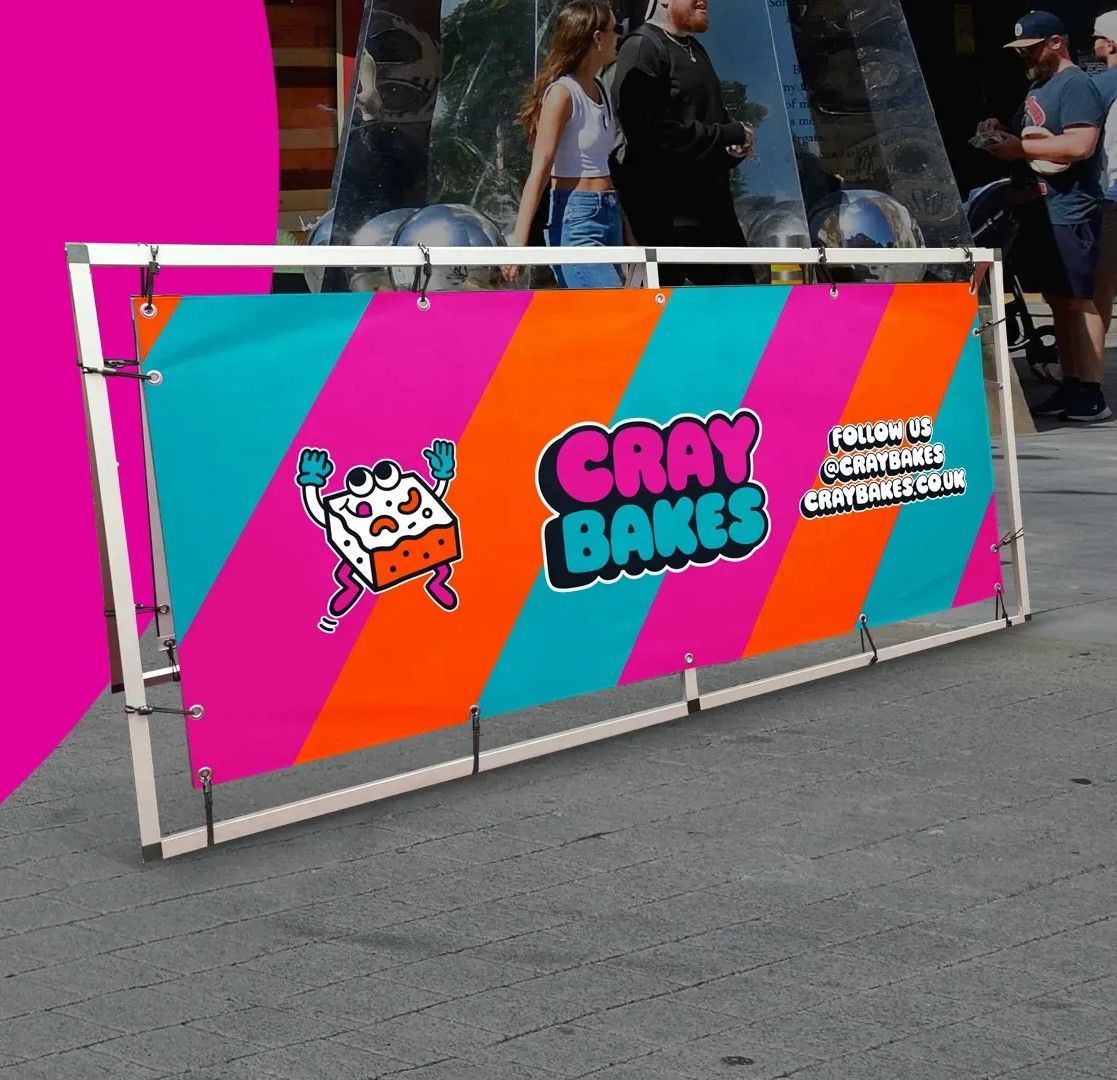
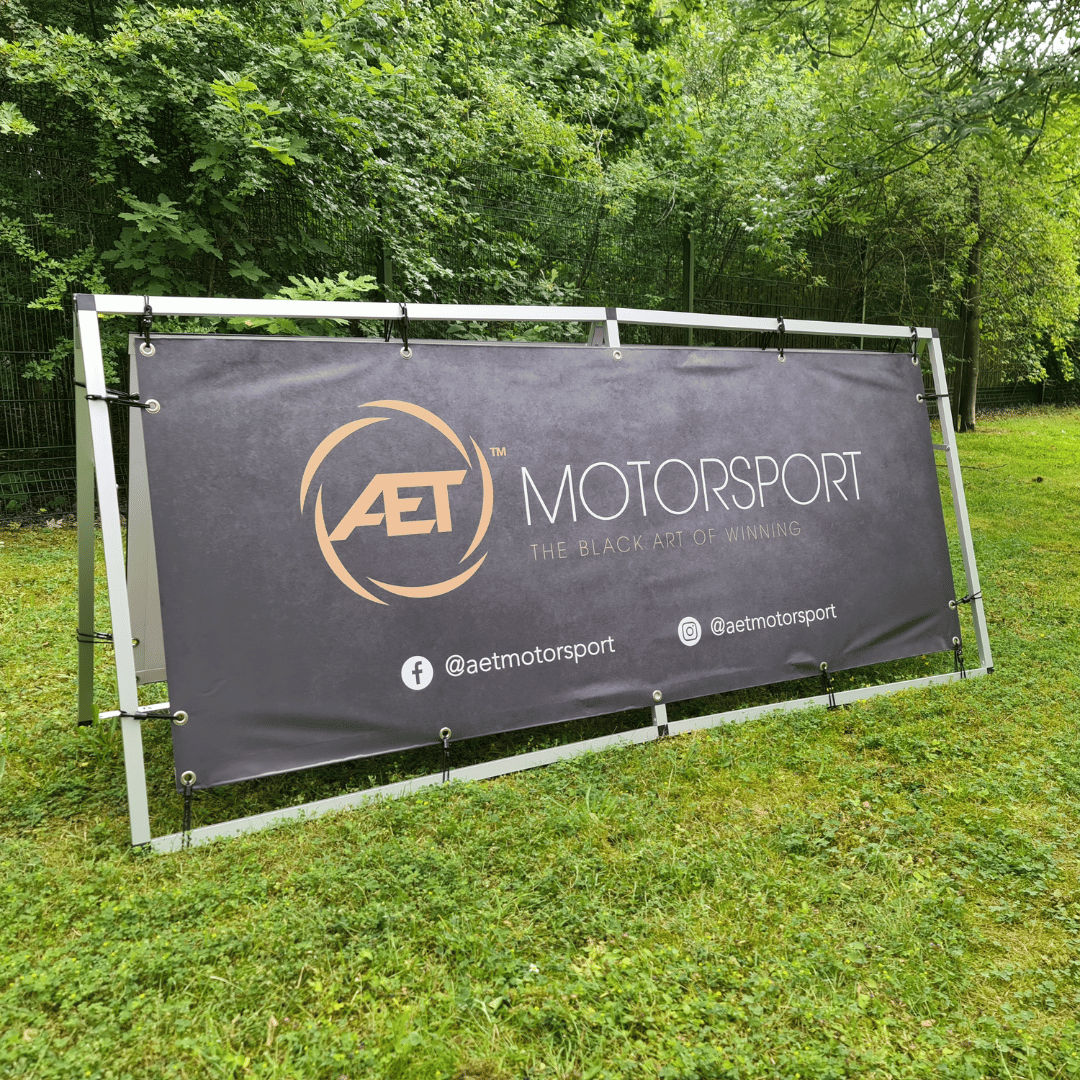
An outdoor frame banner is a printed graphic held taut in a freestanding aluminium A-frame, so it stands wherever you put it without needing a wall or fence. That freestanding, double-sided nature is what sets its design apart from a banner fixed flat to a surface. Here is how to design one for your brand.

Explore Outdoor Frame Banners Get Design Advice Download a Brochure

If you have read our guide to designing a printed banner, the fundamentals carry over: reading distance drives everything, contrast matters, and less text beats more. This guide covers what changes when the banner stands on its own rather than hanging on something.

Design to a Fixed Format

The arch's position decides the design more than anything else. Work out which of these you are doing before you choose a layout.

A start or finish line is the classic use, and it is the one that gets photographed most. Every finisher photo has your arch in it, often with the timing clock and the runner underneath. That makes the top of the span the most valuable space you own.

An entrance arch marks a way in, so the priority is that people recognise it as the entrance from a distance and know whose event it is when they get there.

A sponsor arch exists to give a backer visibility in exchange for their money, which means the design brief is theirs as much as yours, and the space needs planning rather than improvising.

It Stands Alone, So It Is Seen From Every Angle

A banner fixed to a fence has a clear front and a hidden back. A frame banner sits out in the open, on a forecourt, a pavement or an event field, and people approach it from the front, the sides and behind.

That changes two things. First, the banner is rarely viewed perfectly square-on, so a design that only reads head-on will spend most of its life being seen at an angle. Bold, central content survives an angled view far better than something spread to the edges. Second, the back of the banner is visible, which leads to the main decision below.

Decide What Goes on the Back

A frame banner can be printed single or double sided, and because it stands in the open, the back is on show whether you brand it or not.

Single-sided leaves a blank or plain reverse. That is fine when the banner stands against something, or when people only ever approach from one direction, such as a banner facing the road with a wall behind it.

Double-sided is usually the better choice for a freestanding unit in open space, because people genuinely see both faces. You have two options for the second face: repeat the same design so you are identifiable from both directions, or use the two faces for two different messages aimed at two different approaches, for example "Welcome" facing the car park and an offer facing the entrance.

The one thing to avoid is paying for a freestanding banner in an open position and leaving a blank back facing half your audience.

Place Content for a Standing Unit

A frame banner sits on the ground and rises to roughly the height of the frame, which means the bottom portion is at knee and shin height, where it is easily blocked by passing people, parked cars, and anything placed near it.

Keep your logo and main message in the upper two-thirds, where they stay visible above obstructions and sit closer to eye level. The lower section is better used for a website, a secondary line, or simply colour, on the understanding it will often be partly obscured.

Think About Where It Will Stand

Because you can put a frame banner anywhere, it is worth deciding where before you design it, since the position shapes the content.

A banner at a shop or showroom entrance is read by people about to come in, so it suits a welcome, an offer, or opening information. A banner on a forecourt facing the road is a roadside banner and gets the one-message-only treatment. A banner marking a spot at an event, a registration point, an entrance, a directional marker, needs to say what that spot is, clearly and briefly.

If you are buying one frame banner to use in different places, design it for the most demanding position, which is usually the one seen from furthest away.
Match It to the Rest of Your Setup

A frame banner often sits alongside other kit. If you run sail flags, upright outdoor banners or a printed gazebo, keep the colour, logo and tone consistent so the frame banner reads as part of one setup rather than a spare piece.

Because it is freestanding and portable, a frame banner also travels between indoor and outdoor use, so a design that suits both a forecourt and a reception is more versatile than one tied to a single setting.

Let the Design Team Help

Send your logo, brand colours, and a note on where the banner will stand and whether people approach from one side or both. The in-house team will lay it out to the frame format, advise on single versus double sided for your position, and proof it before production.

For the product side, including how it differs from a hung banner, our comparison of PVC banners versus outdoor frame banners covers which suits which job.

Frequently Asked Questions

Should an outdoor frame banner be printed on both sides?
Usually yes, if it stands in open space, because people see both faces. Print the same design on both for identification from any direction, or use each face for a different message. Single-sided suits a banner standing against a wall.
Where should the main content go on a frame banner?
In the upper two-thirds. The lower section sits at knee height and is easily blocked by people, vehicles and nearby objects, so keep the logo and message higher where they stay visible.
Is designing a frame banner different from a hung banner?
The fundamentals are the same, but a frame banner stands alone, is seen from every angle and often from both sides, so bold central content and a decision about the reverse matter more.
Can I use a frame banner indoors as well?
Yes. The freestanding frame works indoors and out, so a design that suits both a forecourt and a reception gives you the most flexibility.
Expert advice from Gala Graphics


Need Help?

Request a call back