Branded motorsport marquee with printed canopy and walls

How to Use an Inflatable Arch at Your Event

Written by Jonathan Rodgers

An inflatable arch turns a start line, finish line or entrance into a branded landmark people run through and photograph. Here is how the INFL8 Club, Sprint and Elite models work, how to choose the right span, and how to run one safely on the day.

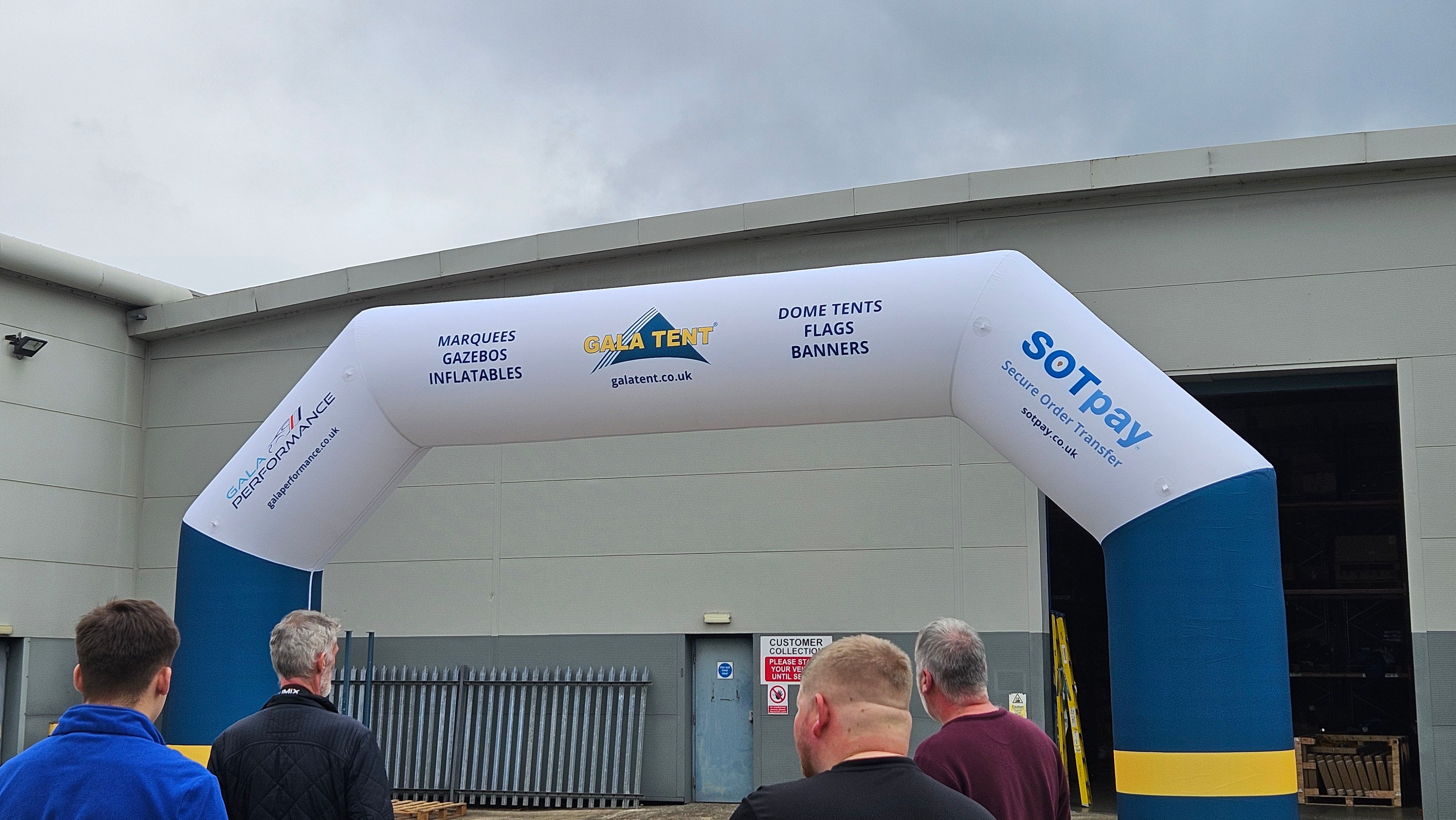
An inflatable arch frames the most photographed point of an event, the start, the finish, or the entrance, with full-colour branding that people move through rather than just walk past. Gala Graphics makes the INFL8 arch in three models and five sizes from 6m to 12m wide, printed edge to edge and holding its shape for up to twenty days with no running blower. Here is how to use one and how to pick the right span.

Some branding gets glanced at. An arch gets run through, driven under, and photographed with people directly beneath it. That makes it one of the few branded structures that becomes part of the event itself rather than a backdrop to it, which is why fun runs, races, motorsport paddocks, and forecourt promotions all reach for one. Used well, an arch is the shot that ends up on every finisher's phone.
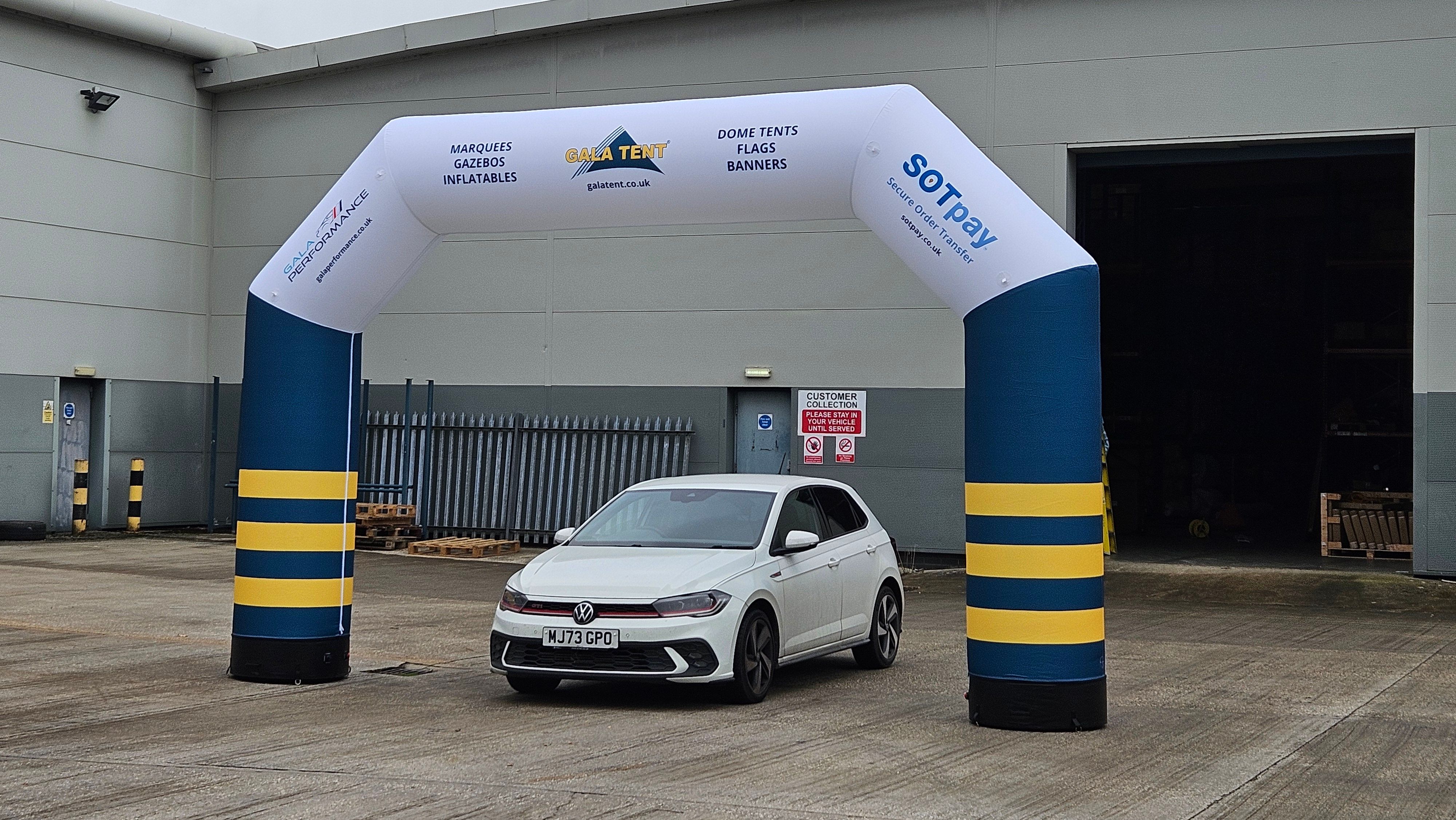
What an Inflatable Arch Actually Is

An INFL8 arch is a sealed-air structure, not a continuously blown one. It inflates in ten to fifteen minutes with an electric pump, then seals and holds firm for up to twenty days with no blower and no mains power running. That is the practical difference that makes it usable at a remote start line or a field with no power: you inflate it, anchor it, and leave it standing for the duration.

The body is high-strength Dacron fabric printed in full-colour dye sublimation across the whole surface, with UV-stable inks so the colour holds up to repeated outdoor use. Every unit comes with a carry bag, anchoring kit, and repair patches, and the Club model packs down to around 62 by 62 by 40cm and weighs about 23kg, so it travels in a car boot.

Choosing the Right Model and Span

The three models differ by tube diameter, which sets how bold and tall the arch reads and how wide a span it holds. Bigger tubes give more presence and cover a wider entrance.

  • Club, 60cm tubes, 6m wide. The entry point into the range. It gives a clear, professional entrance without dominating the space, which suits running clubs and charity fun runs, regional motorsport paddocks, community events, and compact trade show entrances.
  • Sprint, 80cm tubes, 6m and 8m wide. The mid-range model. The wider tubing carries a bolder, taller presence for larger entrances, bigger finish lines, and sponsor activations that need to be seen across a field or car park.
  • Elite, 90cm tubes, 8m and 12m wide. The largest model. The heaviest tubing spans the widest entrances and gives the strongest visual presence, suited to national events, major finish lines, and large sponsor branding.

If you are unsure which span fits your entrance or start line, it is worth measuring the gap and calling 01709 911948 to size it properly rather than guessing, since an arch that is too narrow for a mass start causes a bottleneck.

What Inflatable Arches Are Used For

The same structure does a lot of different jobs:

  • Start and finish lines for fun runs, races, and sportives
  • Race sponsorship and motorsport paddock entrances
  • Retail and forecourt promotions
  • Community days and sports festivals
  • Trade show and exhibition entrances
  • Photo and activation zones

In every case the arch does something a flag or banner cannot: it creates a threshold, a point people pass through, which is exactly why it draws the camera.

Running One Safely on the Day

An arch is a large outdoor structure, so anchoring is not optional. Fix every leg, using pegs on soft ground or sandbags and weight plates on hard standing, and do it as the arch goes up rather than later. The anchoring kit is included for this.

Wind is the limiting factor. The maximum safe legal wind speed for operating any inflatable in the UK is 24mph, which is Force 5 on the Beaufort scale, under HSE guidance. Anchor on every leg, keep an eye on the forecast, and take the arch down if winds are expected above that. For securing a whole setup on an exposed site, our event day setup checklist covers the wider approach.

Building the Rest of the Setup Around It

An arch frames the entrance or the finish. The rest of your kit brands everything between them. Printed flags line the approach and lift your name above the crowd from further out than an arch can reach. PVC banners and outdoor frame banners carry sponsor messaging along the route, and café barriers define finish-line channels and hospitality on the ground. A printed gazebo or branded marquee gives you the covered base behind the arch for registration, timing, or hospitality.

For the full picture, our guide to the best branding products for outdoor events shows how the pieces work together, and since arches are such a favourite for club events, the branding guide for sports clubs and teams covers the rest of the kit. When you are ready to brand one, send the design team a logo or brief through the contact page and they will take it to a proof. Getting your artwork right first helps, which our print-ready artwork guide explains.

Frequently Asked Questions

What is an inflatable arch?
An inflatable arch is a sealed-air structure printed with your artwork, used to frame an entrance, start, or finish line. Gala Graphics prints them in full-colour dye sublimation across the whole body in three models from 6m to 12m wide.
Do inflatable arches need a constant air supply?
No. They inflate in ten to fifteen minutes with the included electric pump and then hold firm for up to twenty days without a running blower or mains power.
What is the difference between the Club, Sprint, and Elite?
Tube diameter and span. The Club has 60cm tubes at 6m wide for smaller events, the Sprint has 80cm tubes in 6m and 8m widths, and the Elite has 90cm tubes in 8m and 12m widths for the widest entrances and the strongest presence.
Can inflatable arches be used in wind?
They are built for outdoor use, but the maximum safe legal wind speed for operating any inflatable in the UK is 24mph, Force 5 on the Beaufort scale, under HSE guidance. Anchor every leg and take it down if winds are forecast above that.
How are they anchored?
With pegs on soft ground, or sandbags and weight plates on hard standing. An anchoring kit is included, along with a carry bag and repair patches.
Expert advice from Gala Graphics


Need Help?

Request a call back